

Preparing for the arrival of ChatGPT Ads in the Netherlands
ChatGPT Ads are coming to the Netherlands, but you cannot set up a campaign yourself yet. Read how it works and how you can prepare now.

Marketing Lead
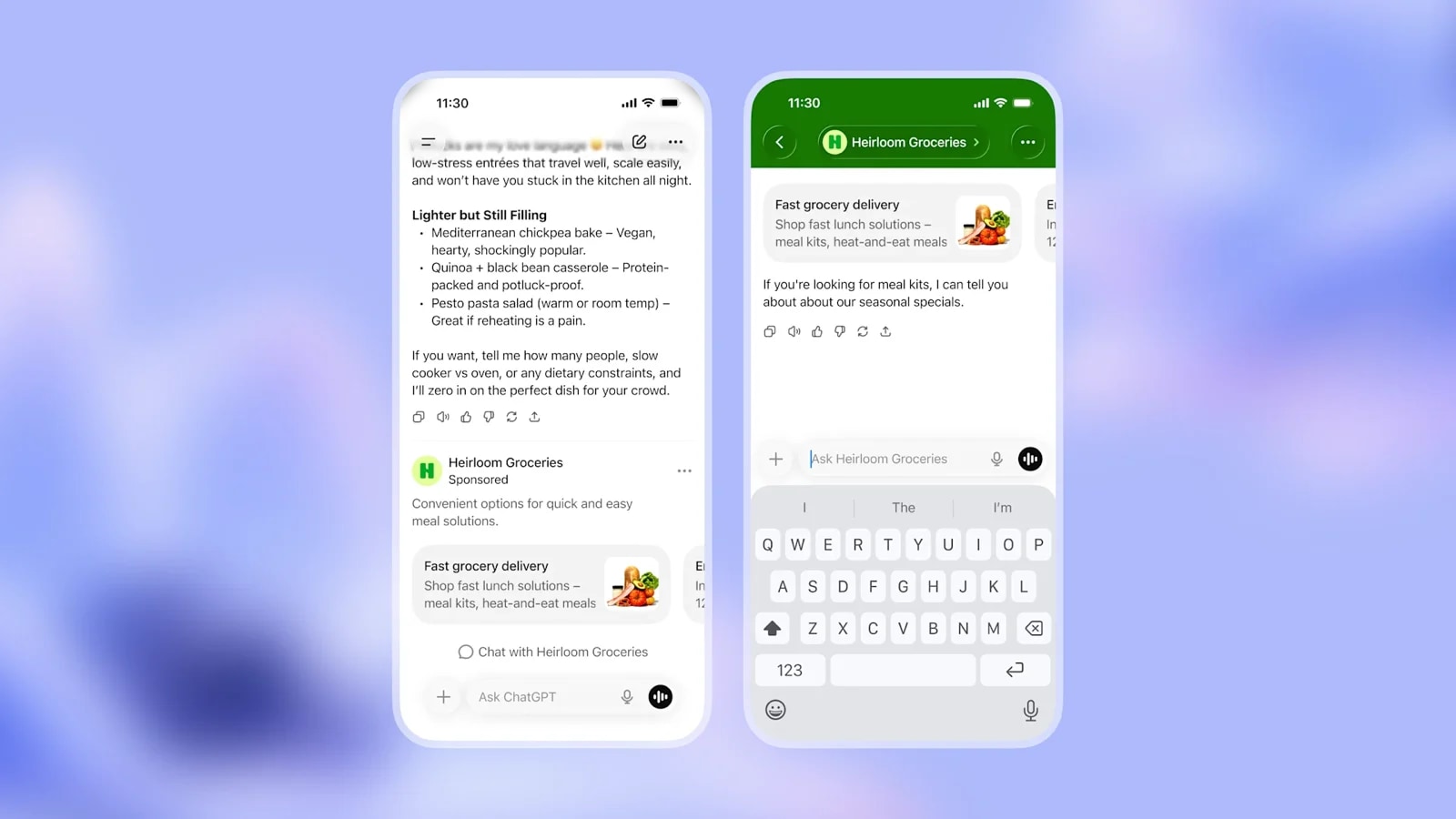
ChatGPT Ads are slowly coming into view in the Netherlands. It is a development many marketers do not want to miss. In the coming years, AI-driven search and assistant advertising will probably become a standard part of discovery, interaction and conversion. The difference goes deeper than a new channel: people find information differently and make their decisions differently.
For many companies, that means you need to think now about your positioning, your data and your message. Companies that understand how AI discovery works today will be able to experiment faster, test better and respond more effectively to new customer needs later on.
ChatGPT Ads are advertisements that appear in AI-driven interfaces where people ask questions, request information and receive product or service suggestions. Instead of travelling only via Google, Bing or social media, people will soon also be able to get information in chat interfaces or AI assistants that matches their question directly.
In practice, that means people click on keywords as well as on intent, context and conversation. You are then working on a fitting answer within a conversation, no longer on an advertisement alone.
You build an answer that fits the customer's question, rather than just an advertisement.
Why prepare now?
The easiest mistake is to wait until ChatGPT Ads actually become visible in the Netherlands. By then it is often too late to set up your brand, content and tracking properly. Building a strong foundation takes time, and that time is better spent now.You can already test the points that will make the difference later: textual positioning, brand recognition, relevance in conversations and collecting data on which prompts and intents belong to your target audience.
Consider these questions, for example:
- Which questions your target audience asks during the buying journey.
- Which signals in your website, leads and CRM you could measure even better.
- Which claims and convictions you want to show clearly in AI interfaces later on.
- How your brand and offering remain visible in an environment that looks more like answer-driven advice than traditional advertising.
Which elements do you need to be ready?
Start with the elements that make for a sustainable AI advertising position. Your content and message need to be clear, logical and distinctive. AI-driven interfaces often favour content that matches the user's intent directly.Your tracking and data infrastructure need to be in order. If you later want to know which prompts, topics and audiences perform best, you need a clear analysis and measurement setup. If your data is spread across different systems, you will not be able to judge properly what works later on.
Your website and landing pages also need to score well on relevance and conversion. A visitor who lands on your site after an AI advice prompt must immediately understand why you are the right choice.
How do you build a strategy without accelerating too early?
The key is to think in terms of question behaviour rather than platforms. You build a strategy around how people ask questions today, what intent lies behind them and where your offering fits best.Start with your target audience. Analyse the questions people really ask: keywords, language, intents and decision criteria. What do people want to know before they choose your solution? Which questions arise at different stages of the customer journey?
Use those insights to build your content, offering and CTAs. Think of practical explanations, use cases, comparisons, case studies and clear next steps. This information needs to be directly visible both on your website and in your ad and AI content.
Test small, measure clearly and build on the signals. You do not need to free up large budgets right away. It is better to learn which conversations, prompts and intents are genuinely relevant to your target audience than to invest immediately in a large campaign that is not yet properly aligned.
Why this matters to you
ChatGPT Ads are not only an opportunity for large players. For smaller and medium-sized companies too, this is important to follow closely now. Those who work structurally on relevant content, brand positioning and measurability today will gain a strong position in the AI-driven future of online marketing.You do not need to know everything right away. It does help to understand now that search behaviour is shifting more and more towards context, conversation and valuable answers. If you set this up well now, you will be better prepared for the next phase of online marketing.
Want to know how you can position your company for ChatGPT Ads today? Then look at your target audience, your offering and your marketing infrastructure. That way you know exactly where you can take a step now that will remain relevant in the future.
Frequently asked questions
Not fully, in the form of a standard ad module available around the clock that you can activate directly as you can with Google Ads. Development is moving fast, though, and it is wise to understand already how these interfaces work and what role they may play in the future.
Not necessarily. The best approach is to get your target audience, content and measurability in order first. If your foundation is strong, you will be in a much better position to invest in a new, AI-driven advertising environment later.
Start with an analysis of your most important questions, relevant content and conversion path. Then check which terms and intents your target audience uses, and which message works most strongly for you in a natural, conversational context.